

In the realm of contemporary interior architecture, furniture design is experiencing a profound shift. Today’s homeowners and interior designers worldwide are moving away from rigid, boxy shapes in favor of spaces that blend emotional comfort, visual tranquility, and intelligent functionality. From compact minimalist apartments to luxury modern residences, the demand for tailored, high-end bespoke cabinetry is at an all-time high.
Below, we explore the defining design trends that characterize modern custom interiors, highlighting how soft-edge engineering, authentic texture synthesis, and multifunctional integrated layouts are reshaping everyday living spaces.
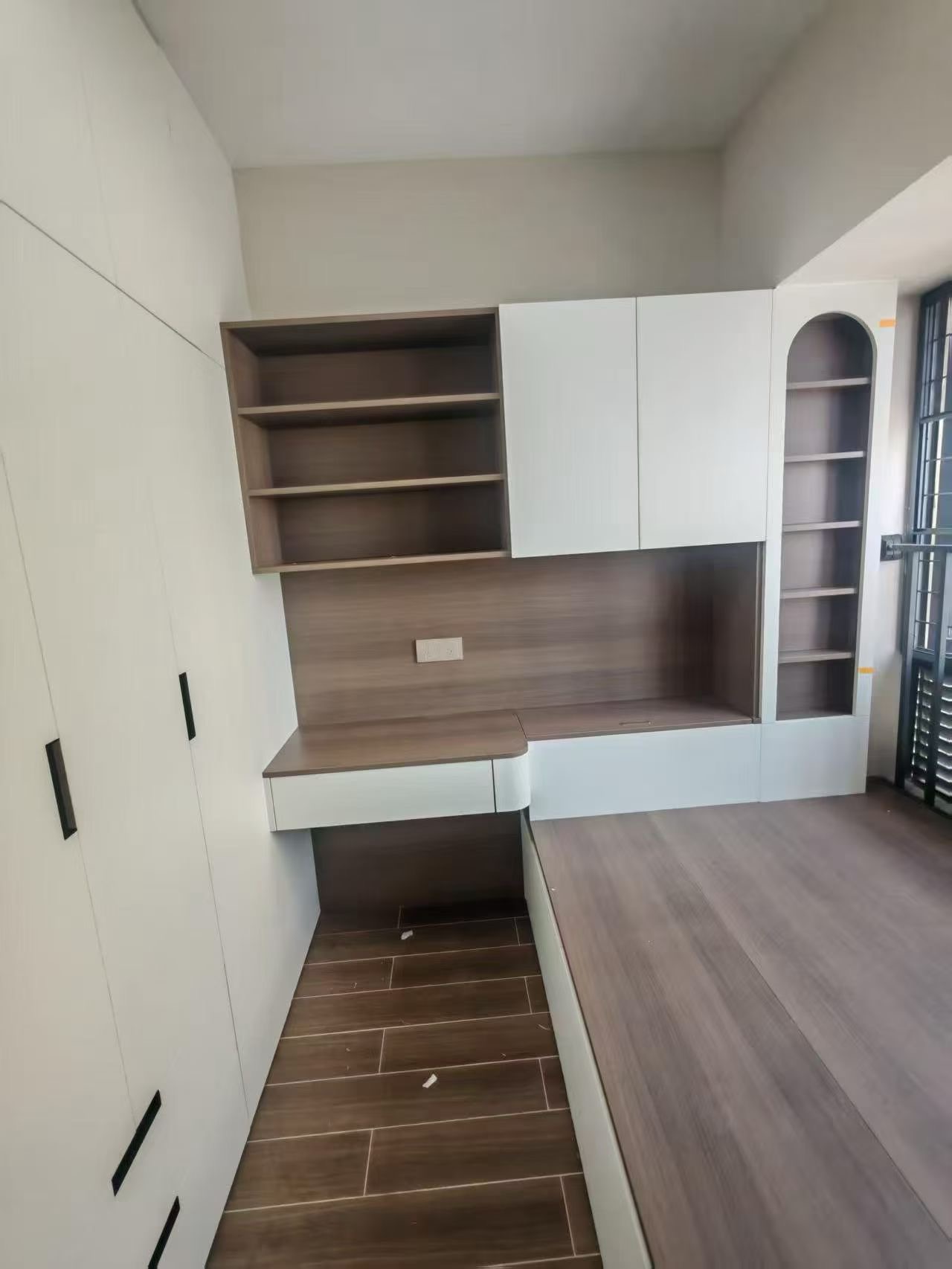
1. Soft-Edge Architecture: The Rise of Rounded Profile Corners
One of the most compelling developments in modern cabinet making is the integration of smooth, rounded corners. Traditional joinery often relies on sharp 90° angles, which can feel harsh in compact environments and present potential safety hazards in family homes.
Modern profile engineering allows cabinetry to feature fluid, curved end-panels—as seen on tall wardrobe margins, floating study desks, and low-profile TV consoles.
Visual Continuity: Curved transitions soften the visual flow between structural walls and built-in furniture, making rooms appear larger and more open.
Ergonomic Safety: Rounded edges provide a child-friendly solution without sacrificing high-end aesthetic value.
Architectural Harmony: Soft contours mirror modern architectural curves, creating a seamless connection between the building’s shell and its interior fittings.
2. Dual-Tone Elegance: Warm Wood Grains Meets Soft Matte Neutrals
Color and texture pairings play a crucial role in creating depth within modern living spaces. The combination of warm, organic wood grain finishes with clean, matte neutral surfaces (such as off-white, light beige, or cashmere gray) has become a classic element of modern luxury.
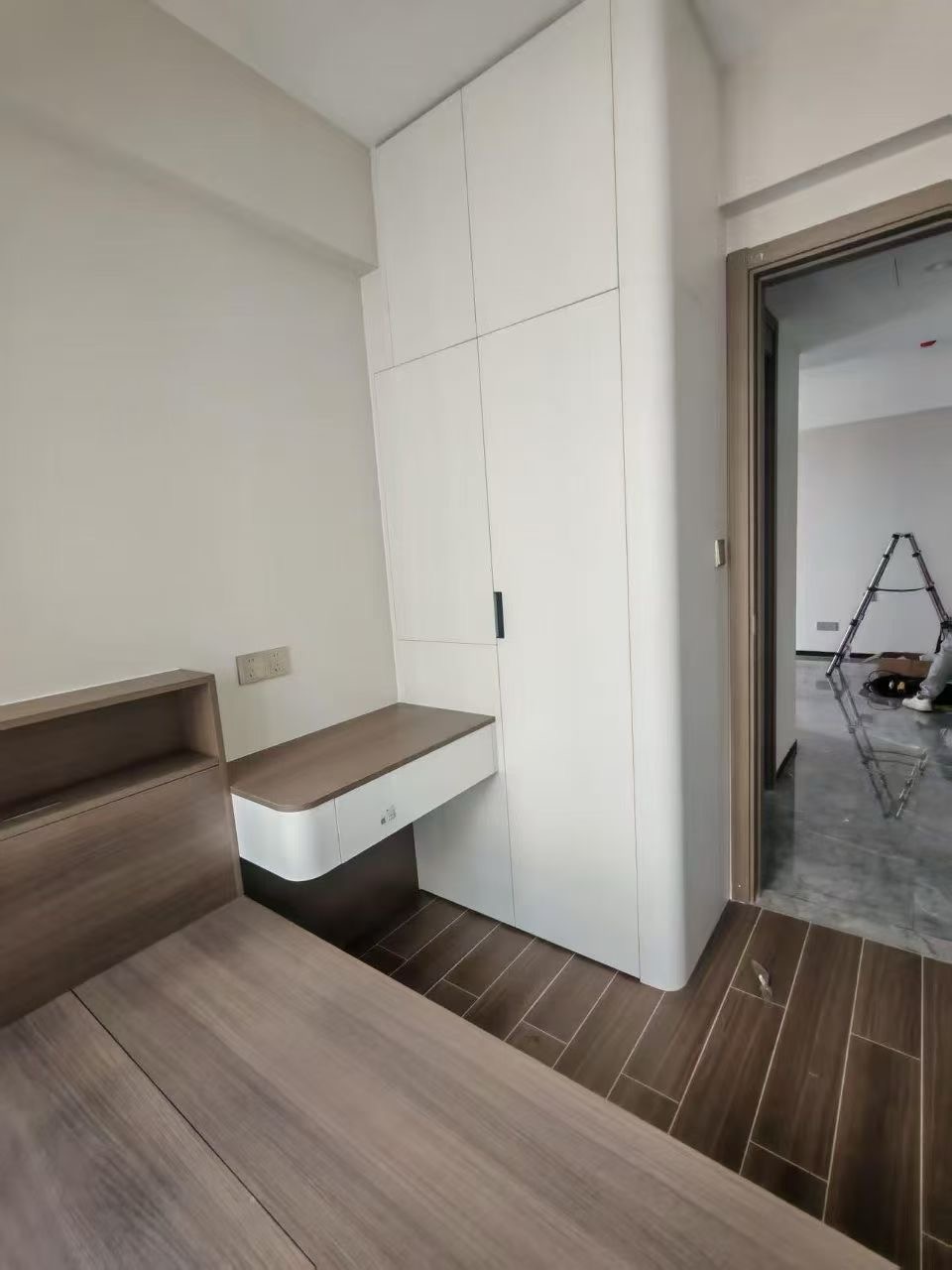
High-Fidelity Wood Grain Finishes
Advancements in surface coating and tactile press technologies allow modern custom furniture to replicate the detailed grain, warm tones, and physical texture of natural oak, walnut, and ash. These surfaces bring organic warmth into a space while maintaining exceptional resistance to daily wear, fading, and moisture.
Matte Surface Balance
When paired with ultra-matte white or soft neutral cabinet doors, the warmth of the wood grain is highlighted without overwhelming the room. This balanced dual-tone palette is central to popular contemporary styles, including Japandi, Modern Nordic, and Warm Minimalism.
3. Integrated Multifunctional Furniture: Maximize Every Square Inch
As modern home layouts prioritize efficiency, standalone furniture is increasingly being replaced by fully integrated, multi-functional built-ins. Integrated designs maximize usable space while maintaining a clean, cohesive visual line throughout the home.
Built-In Bedroom Ecosystems
Combining platform storage beds with floating dressing tables, wall-mounted open shelving, and floor-to-ceiling wardrobes creates a streamlined bedroom layout. By extending cabinetry directly from the bed frame to adjacent walls, floor space is optimized and visual clutter is eliminated.
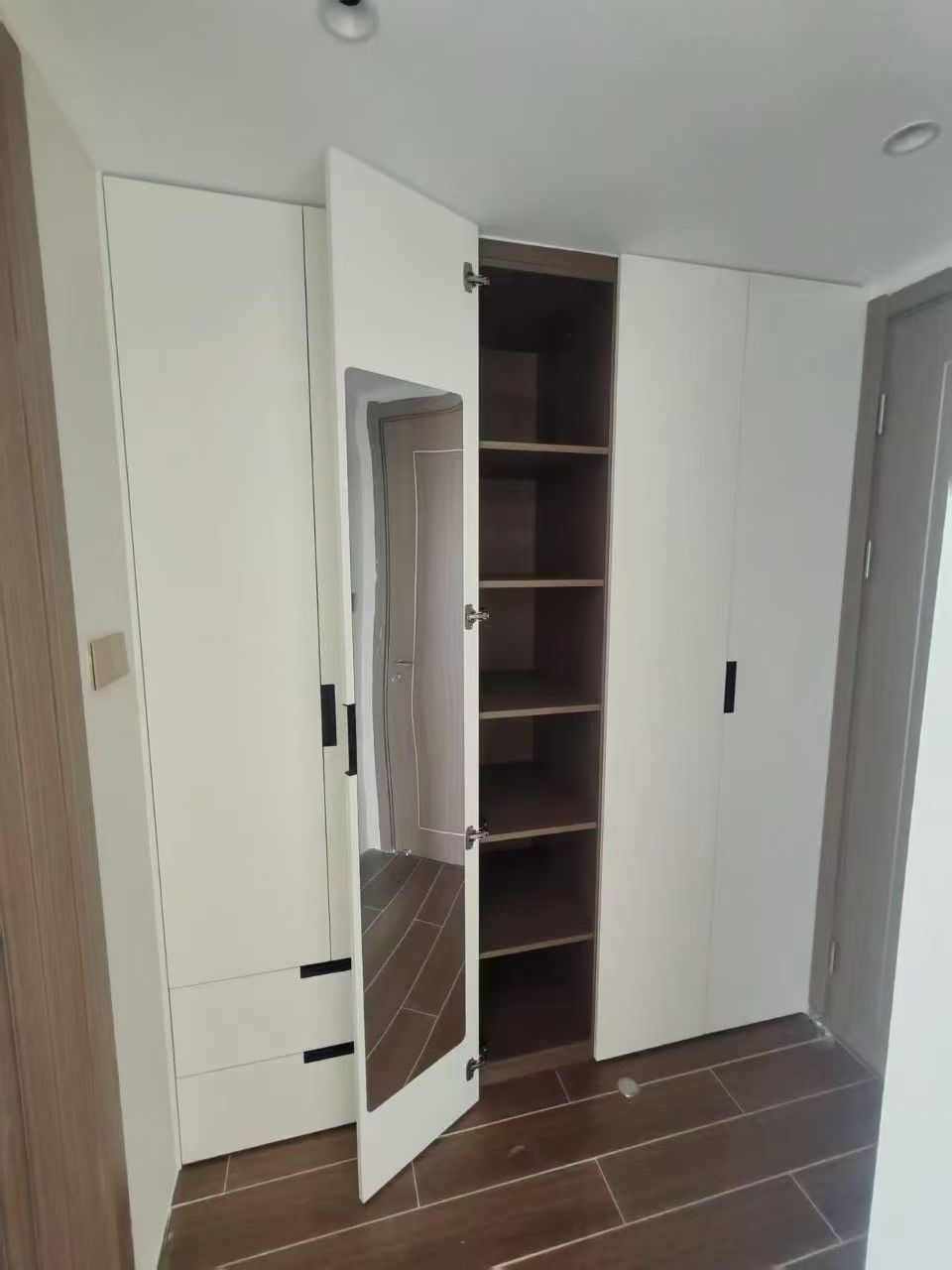
Floating TV Consoles & Wall Assemblies
In living areas, low-slung media cabinets featuring rounded end-caps and continuous handleless facades create a sleek focal point. Hanging units and media desks maintain an open floor area, enhancing the sense of space in both compact apartments and expansive villas.
4. Concealed Aesthetics: Smart Internal Organization & Handleless Profiles
Modern luxury is defined by what remains hidden. Clean, uncluttered exteriors are made possible by advanced internal fittings and subtle hardware solutions.
Integrated Pull Handles & Push-to-Open Systems: Eliminating bulky external hardware preserves the continuous lines of the cabinet facade.
Concealed Dressing Mirrors: Full-length mirrors integrated into wardrobe door interiors provide functionality on demand while preserving a clean exterior look when closed.
Zoned Storage Solutions: Deep drawers, open display niches, and adjustable internal shelving ensure every item has its place, supporting a tidy, organized lifestyle.
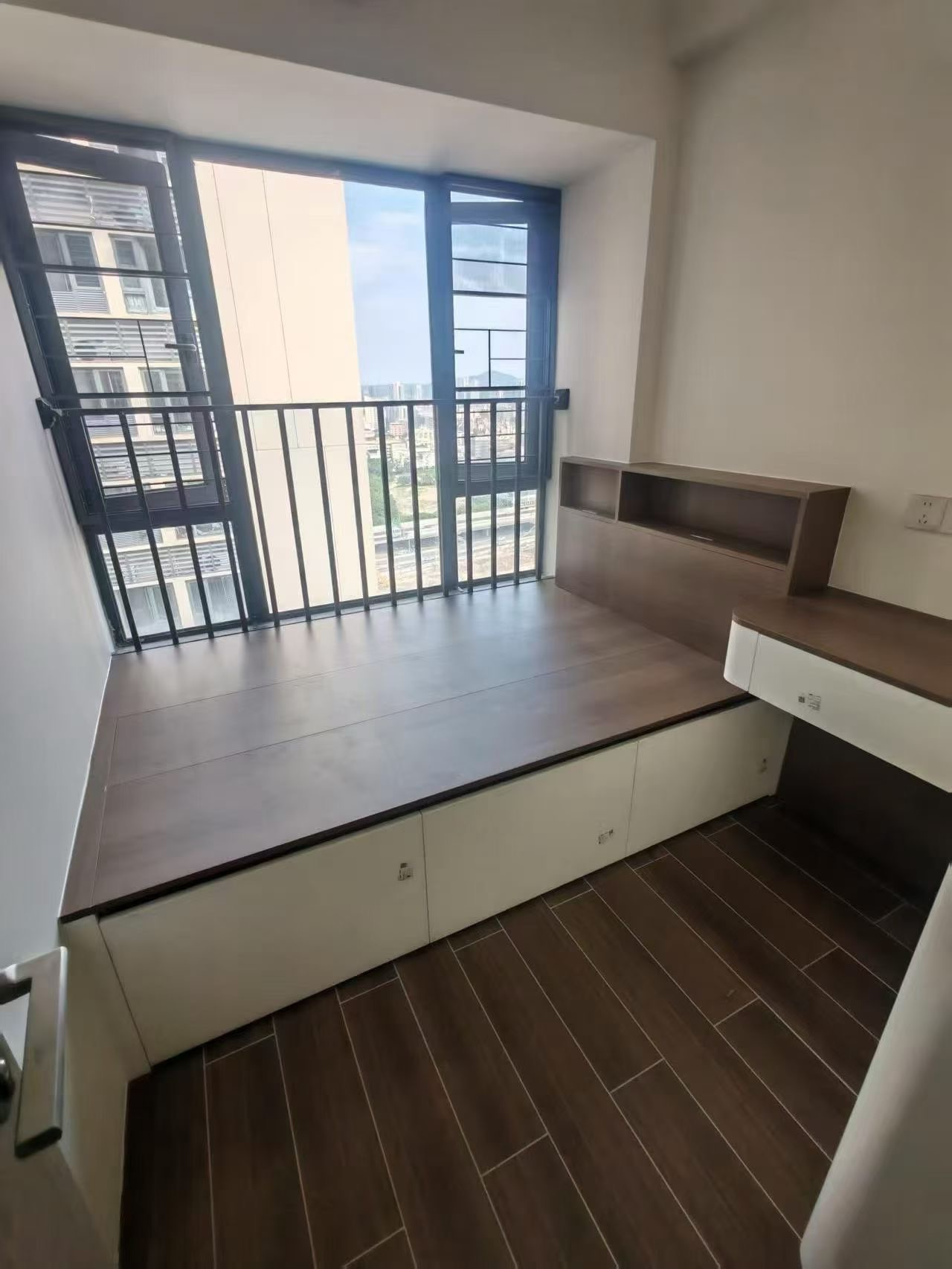
Conclusion: Shaping the Future of Global Interior Design
Whether outfitting high-density city apartments or spacious suburban residences, the future of custom furniture lies in the harmony of form, tactile luxury, and spatial efficiency. By combining soft rounded corners, authentic wood grain finishes, and cohesive integrated designs, modern cabinetry transforms everyday spaces into elegant, functional, and timeless homes.